
Embroidered PatchesRead More
How to Design an Embroidered Patch That Reads at 3 Inches
Three inches is the most popular size for custom embroidered patches in the US.
Oct 21, 2026
6 mins read
Explore expert tips, practical guides, and industry updates to improve every design project.
Three inches is the most popular size for custom embroidered patches in the US.

Picture a 10 inch varsity number on the back of a football jersey, filled solid with thread.
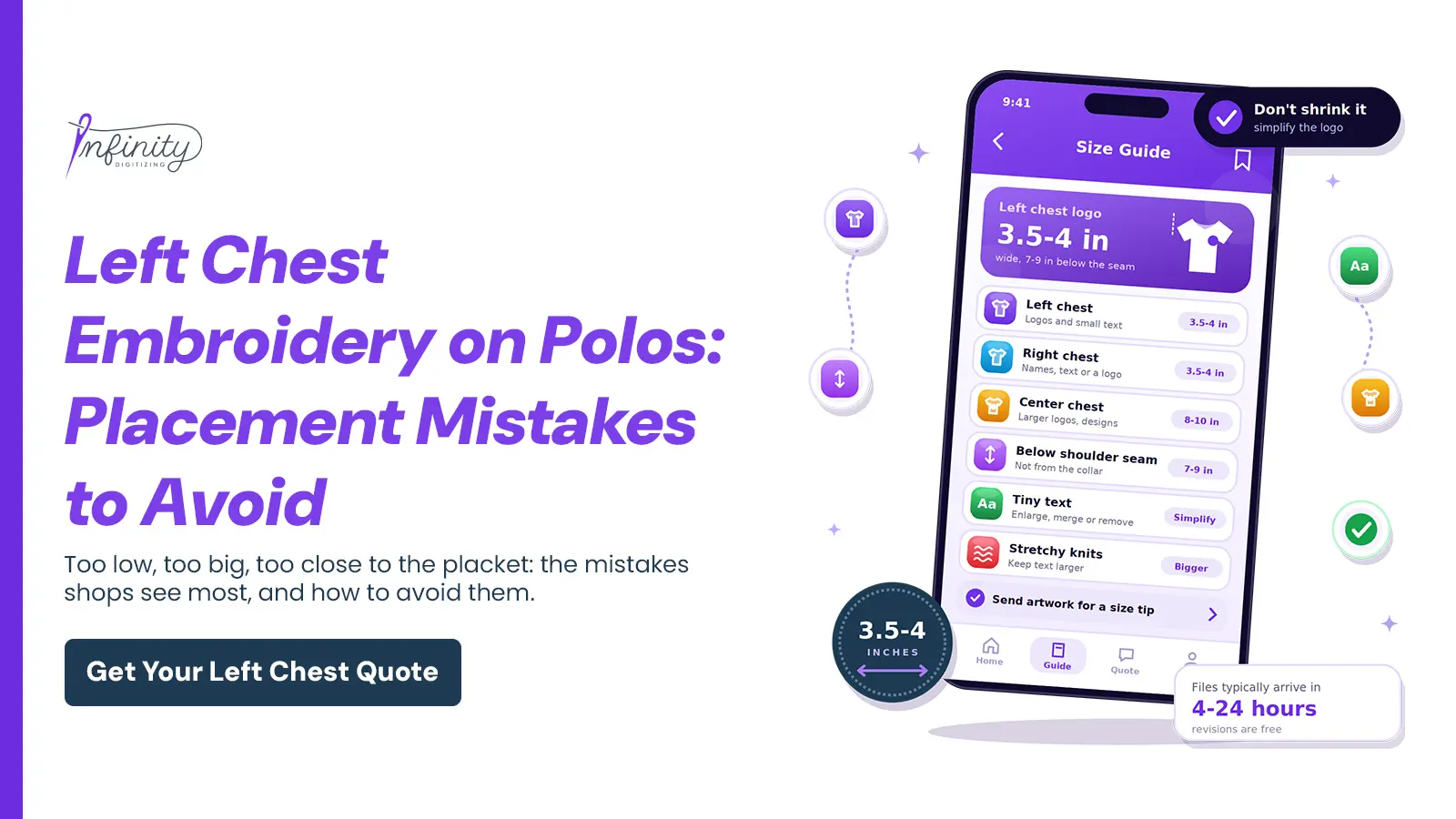
The left chest logo is the most ordered embroidery placement in the United States.
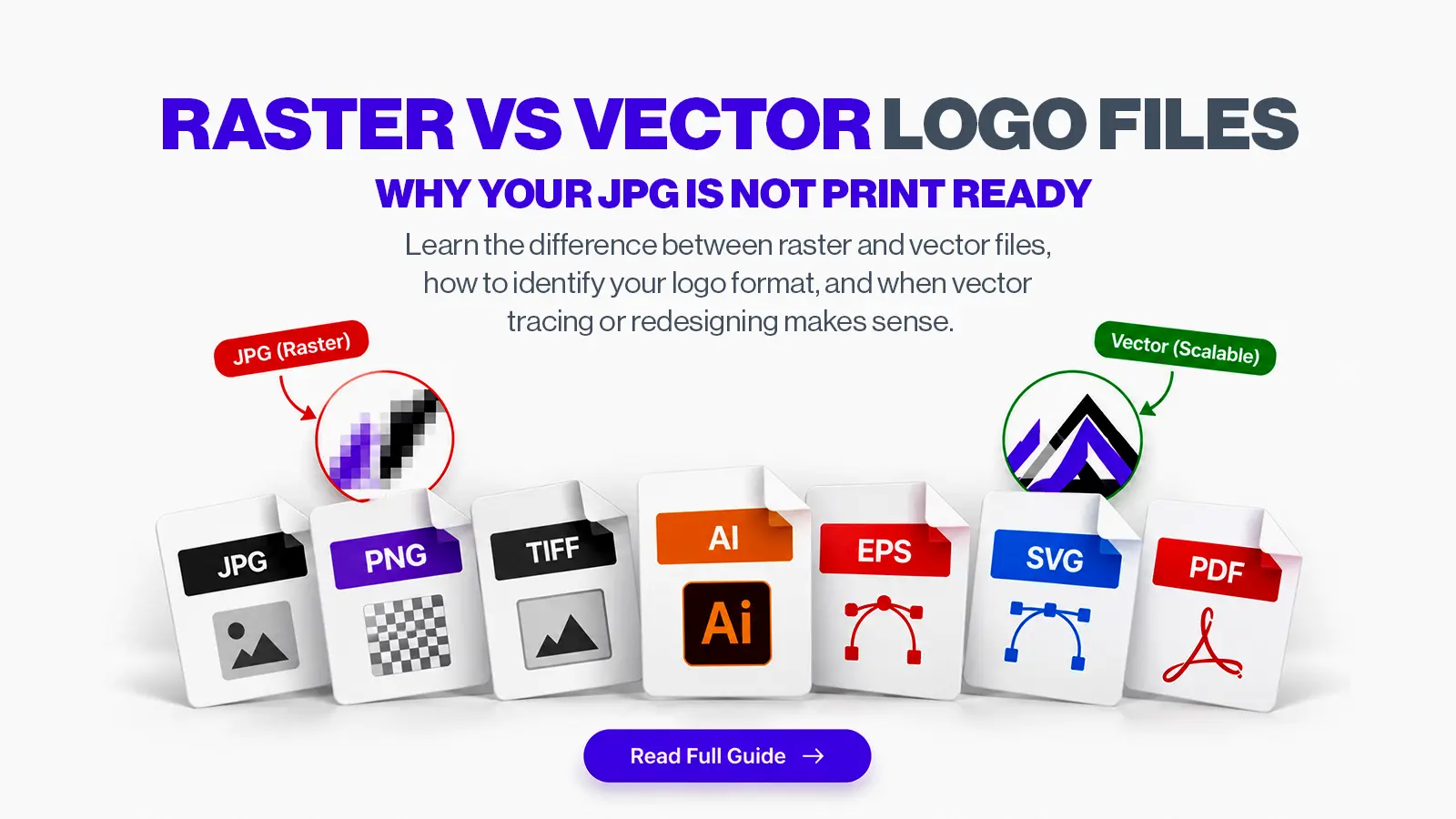
A JPG or PNG is raster and will blur when enlarged or fail on cutters. You need a vector (AI, EPS, SVG or PDF) for print, cutting and clean scaling.

Someone sends over a gorgeous logo with six lines of tiny text and asks for it on a polo at a width of two inches.
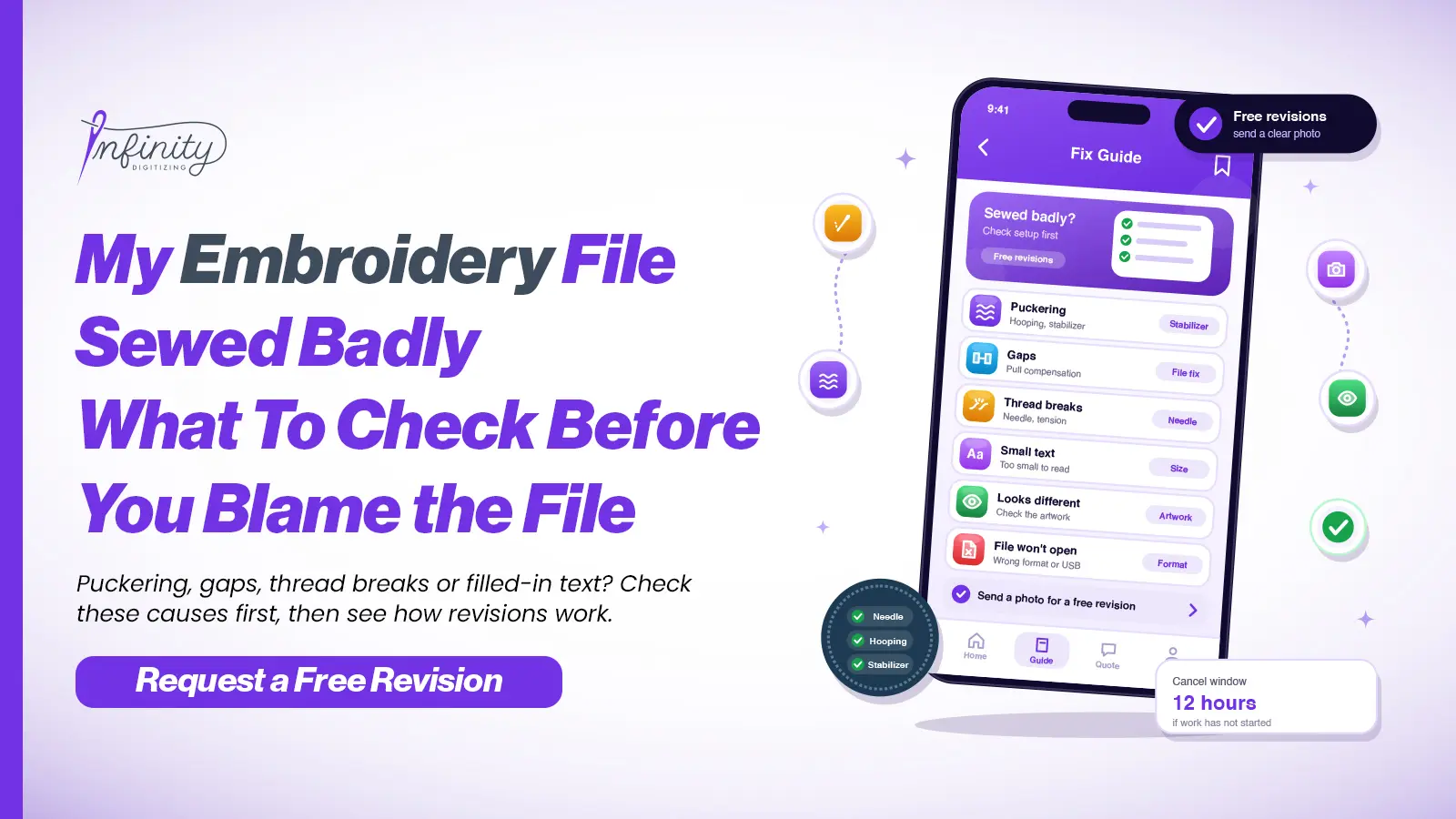
Change the needle, check hooping and stabilizer, and test at the ordered size first. If the fault repeats in the same spot, send a photo for a free revision.

A wrapped van parked outside a coffee shop gets looked at by more people in an hour than most flyers reach in a week. It drives through neighborhoods, waits at red lights, and sits in parking lots, quietly advertising all day.

Chenille is the most tactile patch you can put on a garment. That fuzzy, raised texture is also why it costs more than almost every other patch type, and why some designs simply cannot be made in it.
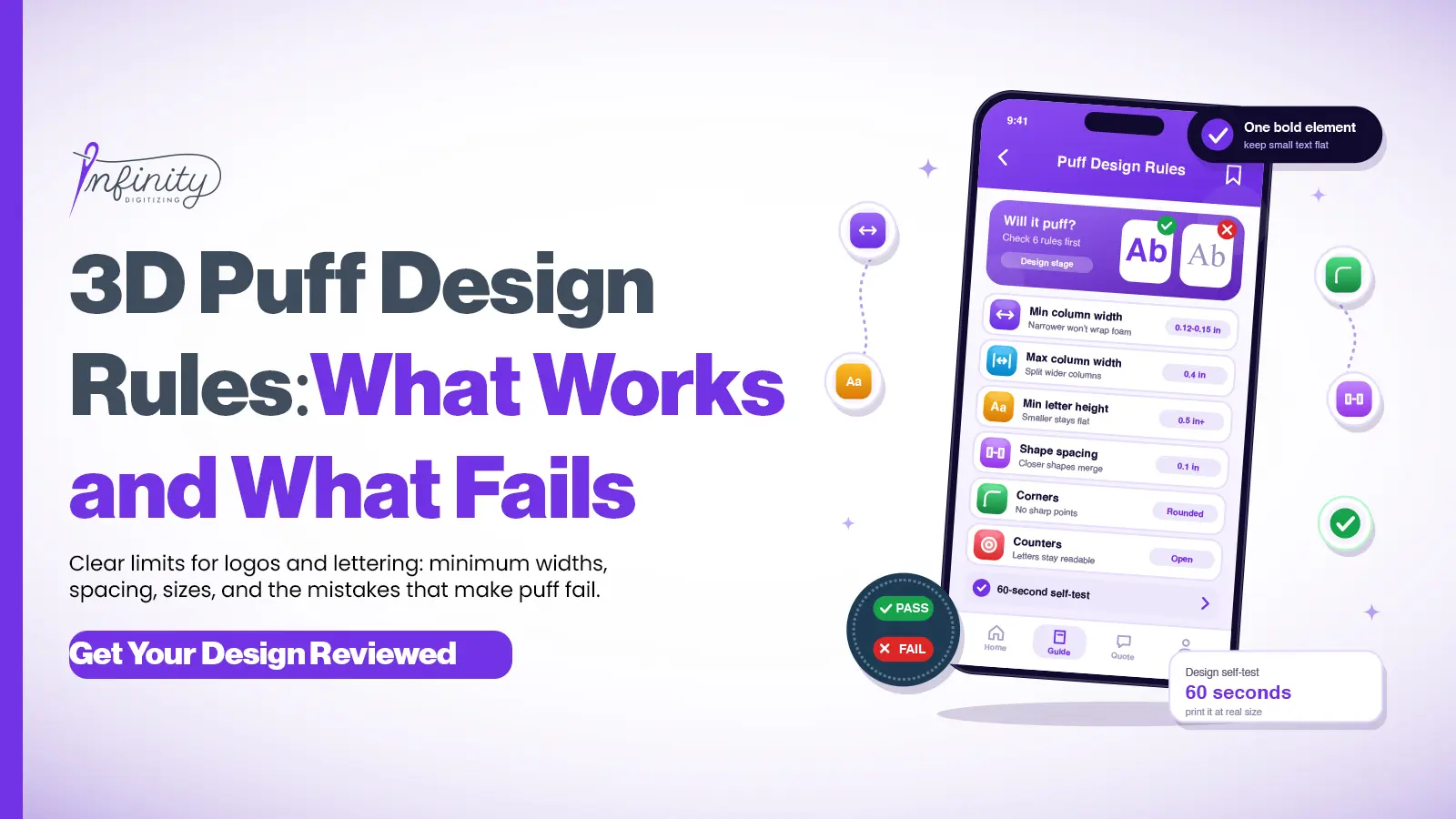
A logo that is too thin, too small, too busy, or too pointy will fail in puff no matter how good the machine, the foam, or the operator is.
Your Artwork Deserves the Best!
Upload it now, and our team will turn it into a clean, high quality file, fast, accurate, no errors, no delays, just quality work